A useful weight-loss snack should solve a problem: it should take the edge off hunger, fit your overall eating plan and help you reach the next meal without feeling out of control. It does not need to be tiny, joyless or marketed as a “diet” food.
No snack directly causes fat loss. Weight loss depends on consistently consuming less energy than you use, within an eating pattern you can maintain. Snacks are optional, but they can help if they prevent extreme hunger or replace a more calorie-dense habit. NIDDK’s weight-management guidance emphasizes a sustainable healthy eating pattern rather than any single food or meal-timing trick.
TL;DR: Build a snack instead of grazing
- Start with a protein food, a fiber-rich food or both.
- Choose a deliberate portion before you begin eating.
- Use minimally processed foods most often, but keep convenient packaged options available for busy days.
- Make the snack large enough to address real hunger but smaller than a normal meal.
- If you are not hungry between meals, you do not need to snack simply because a plan says you should.
The simple formula for a more filling snack
Protein and fiber are useful starting points because they can make a modest snack more satisfying. Reviews suggest that higher-protein eating patterns may improve perceived fullness in adults with overweight or obesity, although results vary and protein is not an automatic weight-loss solution. Certain fibers also appear to reduce appetite in the short term, but their average effects on energy intake and body weight are relatively small. systematic review of protein and appetite
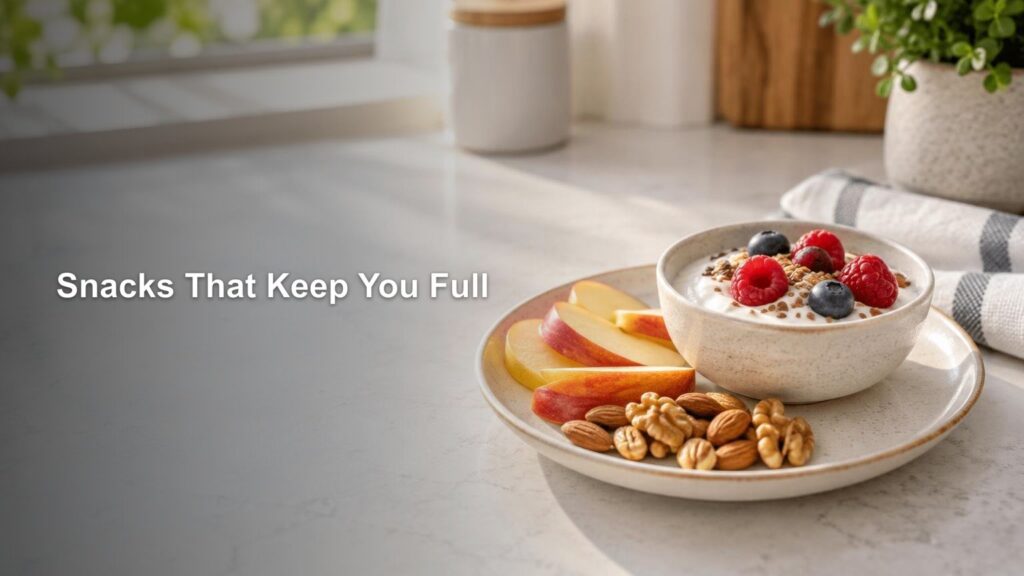
In practice, use this formula: protein plus produce or another fiber-rich food, followed by a portion check. That might mean yogurt with berries, hummus with vegetables or an apple with measured nut butter. You do not need to hit a rigid protein threshold at every snack. Your full-day eating pattern matters more, and our guide to protein per meal for muscle and fullness can help you put snack protein in context.
| Snack formula | Easy combinations | What to watch |
|---|---|---|
| Protein + fruit | Plain Greek yogurt and berries; cottage cheese and sliced peach | Sweetened dairy products can contain substantial added sugar. |
| Protein + vegetables | Hummus and peppers; yogurt-based dip and carrots | Pouring dip directly from a large container makes portions harder to judge. |
| Protein + whole grain | Cottage cheese and whole-grain crispbread; egg and whole-grain toast | Crackers and toast vary widely in serving size and fiber. |
| Fruit + measured fat | Apple and nut butter; pear and a small portion of nuts | Nuts and nut butter are nutritious but calorie-dense. |
| Planned sweet snack | Yogurt, fruit and cinnamon; chia pudding with berries | Treat the serving as the snack rather than eating from a multi-serving package. |
Healthy snack ideas that do not feel like punishment
The best choice depends on your hunger, schedule and next meal. Use these combinations as flexible templates rather than mandatory recipes:
- Plain Greek yogurt with berries and cinnamon
- Cottage cheese with sliced fruit
- Hummus with carrots, cucumber or bell-pepper strips
- A hard-boiled egg with fruit
- Edamame with a piece of fruit
- Apple slices with a measured spoonful of peanut or almond butter
- A small portion of nuts paired with an orange or pear
- Tuna on whole-grain crispbread
- Roasted chickpeas with raw vegetables
- Overnight oats made with yogurt and berries
- Air-popped popcorn paired with a protein food such as yogurt
- A simple protein-and-fiber smoothie portioned as a snack rather than a meal
Current U.S. dietary guidance emphasizes nutrient-dense foods such as fruits, vegetables, whole grains, dairy and protein foods. Those categories provide plenty of mix-and-match snack options without requiring specialty products. Dietary Guidelines for Americans If you want to understand the second half of the formula more deeply, see our practical explanation of fiber’s role in the diet.
Portion awareness matters—even with healthy food
A snack can contain nutritious ingredients and still quietly push daily intake higher than intended. Nuts, nut butter, granola, cheese, dried fruit and trail mix are common examples: all can fit, but eating them freely from a large package makes the amount difficult to track.
Portion the food before sitting down. Put nuts in a small bowl, spoon nut butter onto the fruit and divide a bulk package into individual servings when you bring it home. NIDDK specifically recommends checking serving sizes, dividing large packages and keeping helpful options visible and accessible. These same preparation habits work well within a broader simple meal-prep system for weight loss.
How to evaluate a packaged snack
Convenience matters. A packaged snack that prevents an unplanned vending-machine run may be more useful than an idealized option you never have available. Check the serving size and number of servings first, then review calories, protein, fiber, added sugars and sodium.
Pay particular attention to packages that look like one serving but contain more than one. Also distinguish total sugar from added sugar: fruit and plain dairy can contain naturally occurring sugars, while the added-sugars line identifies sugar introduced during processing. The FDA’s added-sugars label guide explains that distinction.
Do not reduce the decision to one number. A low-calorie snack that leaves you hungry ten minutes later may be less useful than a somewhat larger option containing protein and fiber. The goal is not to find the smallest possible snack; it is to find the smallest practical option that comfortably bridges the gap to your next meal.
When a snack helps—and when it does not
A planned snack can work well before a workout, during a long stretch between meals or at the time of day when you routinely become overly hungry. It can also provide a structured replacement for habitual sweets or mindless grazing.
On the other hand, adding snacks to an already satisfying meal pattern offers no special weight-loss advantage. Research comparing different eating frequencies has not found a reliable body-weight benefit from simply eating more or less often when the broader diet is controlled. If snacks regularly become mini-meals, strengthen your main meals with more protein, produce and high-fiber carbohydrates before adding another eating occasion.
Frequently asked questions
How many snacks should I eat while losing weight?
There is no required number. Some people do well with one planned afternoon snack, while others prefer three satisfying meals and no snacks. Choose the pattern that controls hunger and helps you maintain an appropriate overall intake.
Are protein bars good for weight loss?
They can be convenient, but evaluate the full label. Compare the serving size, calories, protein, fiber and added sugar, and choose a bar that satisfies you. A bar is not automatically better than yogurt, fruit, eggs or another simple food.
Can I eat nuts while trying to lose weight?
Yes. Nuts provide useful nutrients and can make a snack satisfying, but they pack substantial energy into a small volume. Measure a portion instead of eating directly from the bag, and consider pairing it with fruit for more volume.
Should everyone increase protein for fuller snacks?
Not necessarily. People with chronic kidney disease may need individualized guidance about protein and other nutrients from a clinician or registered dietitian. Medical needs take priority over a general snack formula.
The practical takeaway
The most reliable filling snacks for weight loss are not exotic. Combine a protein food or fiber-rich food with a sensible portion, then judge the result by what happens next: Does it calm hunger and help you reach your next meal comfortably? If so, keep it in rotation. If it triggers more grazing or regularly becomes another full meal, adjust the portion or improve the meals around it.
References
- Eating & Physical Activity to Lose or Maintain Weight – NIDDK
- The effects of eating frequency on changes in body composition and cardiometabolic health in adults: a systematic review with meta-analysis of randomized trials – PubMed
- Dietary protein and appetite sensations in individuals with overweight and obesity: a systematic review.
- Effects of dietary fibre on subjective appetite, energy intake and body weight: a systematic review of randomized controlled trials – PubMed
- Dietary Guidelines for Americans | odphp.health.gov
- Food Portions: Choosing Just Enough for You – NIDDK
- Added Sugars on the Nutrition Facts Label | FDA
- Healthy Eating for Adults with Chronic Kidney Disease – NIDDK