
TLDR
A balanced plate for weight loss is a flexible visual template: fill roughly half your plate with nonstarchy vegetables and/or fruit, one quarter with a protein food, and one quarter with a carbohydrate or starchy food. Add fats, sauces, cheese, and calorie-containing drinks intentionally rather than treating them as invisible extras. This structure can simplify portions and make satisfying, lower-calorie meals easier to repeat, but it does not make calories irrelevant or guarantee weight loss.
You do not need to weigh every ingredient to improve how you eat. The plate method replaces detailed tracking with four decisions: choose a protein, make produce prominent, add an appropriate portion of carbohydrate, and control the calorie-dense extras. It is a starting framework, not a rigid prescription, so you can adjust it for hunger, training, dietary preferences, and the foods available to you.
What a balanced plate for weight loss looks like
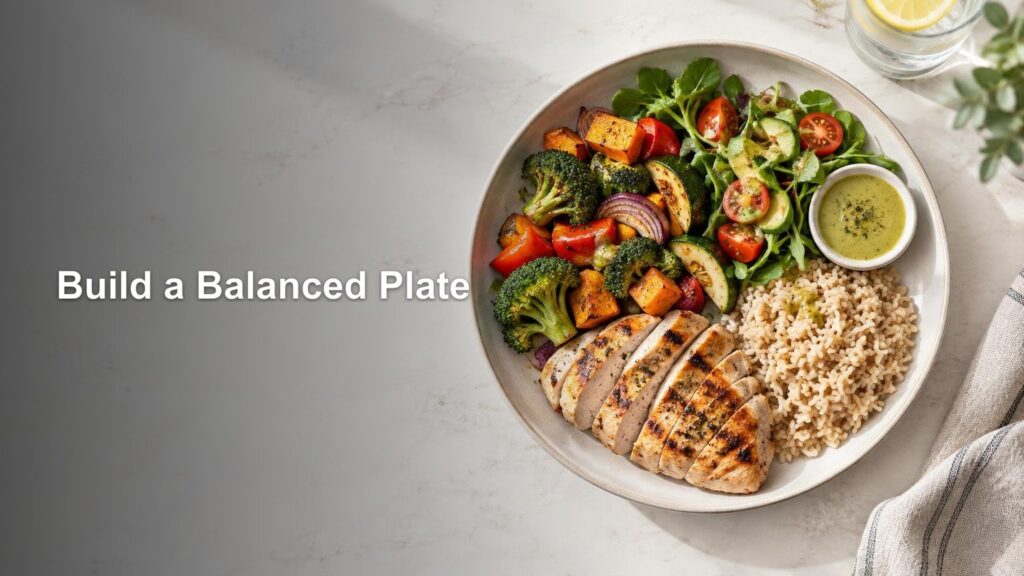
Picture a normal dinner plate divided into three sections. Reserve about half for colorful produce, one quarter for protein, and one quarter for rice, pasta, bread, potatoes, beans, grains, or another starchy food. A common variation emphasizes nonstarchy vegetables in the produce section, while fruit can sit on the plate or accompany the meal.
- Half: nonstarchy vegetables and/or fruit, such as broccoli, peppers, salad greens, carrots, green beans, berries, or an apple.
- One quarter: protein, such as chicken, fish, eggs, lean meat, tofu, tempeh, lentils, beans, cottage cheese, or Greek-style yogurt.
- One quarter: a carbohydrate or starchy food, such as rice, oats, pasta, bread, corn, potatoes, quinoa, beans, or fruit.
- Intentional extras: cooking oil, dressing, mayonnaise, cheese, cream-based sauce, nuts, avocado, alcohol, and sweetened drinks. These do not need to disappear, but they should be visible in your decision-making.
This half-and-quarters layout is common in portion-control plate research. However, the studies frequently combine the plate with other weight-management support, so the picture on the plate should be viewed as a practical tool rather than a stand-alone treatment. A systematic review and meta-analysis found improvements in weight-related measures in portion-control-plate interventions, but it included only five publications, which calls for cautious interpretation.
Why the framework can make weight loss easier
Weight loss still requires your average energy intake to be low enough relative to your needs. The plate method may help create that condition without asking you to calculate every calorie. It changes the proportions of a meal and gives you a repeatable stopping point when serving food.
Produce adds volume
Many fruits and vegetables provide water and fiber, allowing them to add considerable volume to a meal. Replacing part of a more calorie-dense dish with produce can reduce meal calories without shrinking the amount of food as dramatically. The CDC’s guidance on using fruits and vegetables for healthy weight management also stresses that total intake and preparation methods still matter. Frying vegetables or adding large quantities of oil, butter, cheese, or creamy sauce can change the calorie content substantially.
This is an application of energy density: water-rich foods can provide more food volume for a given amount of energy. Research supports energy density as a useful weight-management concept, although low-energy-density foods do not independently guarantee long-term weight loss.
Protein may make the meal more satisfying
Including a clear protein source can support a more complete meal and help maintain muscle when paired with resistance training and an appropriate overall diet. Evidence on protein and appetite in people with overweight or obesity is mixed, but some higher-protein approaches may improve fullness. Protein is therefore a useful hunger-management tool, not an automatic appetite off switch. For a broader explanation, see how increased protein intake affects the body.
The visual boundary simplifies portions
A portion is the amount you choose to eat at one time. A serving size on a package is a standardized reference amount, not a personalized instruction telling you how much to eat. The plate method keeps the focus on the whole meal rather than requiring every package serving to dictate your choices.
Build your plate in four decisions
1. Choose the protein anchor
Start with one obvious protein food. This prevents a meal from becoming mostly bread, pasta, snack foods, or sauce with only a token amount of protein. You do not need a universal gram target for every meal; needs vary with body size, goals, activity, age, and health circumstances.
Convenient choices count. Rotisserie chicken, canned tuna, eggs, plain yogurt, pre-cooked lentils, frozen fish, tofu, and lower-sodium canned beans can all reduce preparation time. Vegetarians and vegans can combine tofu, tempeh, seitan, lentils, beans, edamame, or textured vegetable protein with grains and vegetables.
2. Make produce the largest section
Use vegetables you will actually eat. Fresh produce is not mandatory: frozen vegetables are convenient, minimize spoilage, and can go directly into a pan or microwave. Canned vegetables also work; draining or rinsing them may be useful when you want less sodium. Salad is only one option. Roasted vegetables, vegetable soup, stir-fry mixtures, slaw, salsa, and steamed frozen produce all fit.
If half a plate of vegetables feels unrealistic, begin by adding one vegetable or fruit to meals that currently have none. Progressively replace part of the most calorie-dense component instead of piling produce on top of an unchanged meal.
3. Add the carbohydrate or starch
Rice, pasta, potatoes, oats, bread, and fruit do not need to be forbidden. They provide energy, make meals familiar, and can be especially useful around demanding activity. The practical move is to let them occupy one part of the meal instead of allowing them to become the entire meal.
Fiber-rich options such as oats, beans, lentils, potatoes with skin, whole grains, and fruit can add variety and help make the meal satisfying. Learn more about the role of fiber in a balanced diet. You can still use white rice, regular pasta, or the bread your family prefers; pair it with protein and produce rather than judging the meal by one ingredient.
4. Add flavor and fat deliberately
Fat adds flavor and can make vegetables and lean proteins much more appealing. The issue is not that olive oil, nuts, avocado, cheese, or dressing are bad foods. It is that small-looking amounts can contribute substantial energy and are easy to pour or sprinkle without noticing.
Choose the extra that matters most to the meal. A taco bowl might get avocado and salsa rather than avocado, cheese, sour cream, queso, and a heavy dressing all at once. Pasta might get Parmesan, while vegetables use lemon and herbs. This preserves enjoyment without turning every optional extra into a default.
Five balanced plate examples
- Taco bowl: shredded lettuce, tomatoes, peppers, and salsa as the largest section; chicken, lean beef, tofu, or beans for protein; rice or corn as the starch; then a deliberate spoonful of guacamole or cheese.
- Pasta night: make roughly half the plate roasted vegetables or salad, add chicken, seafood, lentils, or tofu, and use pasta for the remaining section. Measure oil and use Parmesan for flavor rather than pouring both freely.
- Breakfast: use eggs, cottage cheese, or plain yogurt as the protein; add berries, an orange, spinach, mushrooms, or tomatoes; include oats, potatoes, or toast; then add nut butter, cheese, or cooking oil intentionally.
- Vegetarian grain bowl: use a large base of greens and roasted vegetables, add tofu, tempeh, edamame, lentils, or beans, include quinoa or rice, and finish with a controlled amount of tahini dressing.
- Restaurant meal: identify the protein, vegetable, and starch before eating. If vegetables are scarce, order a side salad or vegetable. Consider taking part of an oversized starch or rich entrée home, and request dressing or sauce on the side when that helps you control the amount.
How to adjust the plate without abandoning it
The 50/25/25 division is a visual starting point, not a law. If you consistently finish a meal genuinely hungry, first check whether it contained a meaningful protein source, plenty of produce, and enough total food. You might add more vegetables, fruit, protein, or a modest amount of starch rather than trying to tolerate persistent hunger.
On a hard training day, a larger carbohydrate portion may improve practicality and recovery, especially around a long or demanding session. On a sedentary day, the standard division may be sufficient. Training also matters for body composition: resistance exercise helps preserve strength and lean tissue, while cardio can raise weekly activity. This comparison of cardio and weights for weight loss can help you decide where to place your training emphasis.
Budget adjustments are straightforward. Use frozen vegetables, seasonal fruit, potatoes, oats, eggs, canned tuna, dried or canned beans, lentils, and store-brand grains. A balanced meal does not require specialty foods. For family meals, serve the same components and let each person change the proportions instead of cooking multiple separate dinners.
What the plate method does not automatically fix
A well-proportioned dinner cannot always compensate for an entire day of unplanned grazing, large sweetened drinks, frequent alcohol, or repeated second helpings. The framework also becomes less useful when calorie-dense additions are ignored because they do not occupy a formal plate section.
- Sweetened coffee, soda, juice drinks, alcohol, and other calorie-containing beverages
- Oil used during cooking and again at the table
- Dressings, mayonnaise, creamy sauces, cheese, and spreads
- Snacks eaten directly from large packages
- Restaurant portions that could reasonably make more than one meal
- Second helpings taken automatically rather than in response to continued physical hunger
- Inconsistent meals that lead to intense hunger and less deliberate choices later
You do not have to eliminate these items. Make them count as real parts of your eating pattern. Pour dressing into a small container, put snacks in a bowl, decide whether you want a caloric drink with the meal, and pause before taking seconds.
Troubleshooting a lack of progress
If several weeks pass without the progress you expected, avoid immediately shrinking every meal to an unsatisfying size. Review the easy-to-miss variables first: drinks, alcohol, cooking oil, dressings, sauces, snack portions, restaurant frequency, and second helpings. Then consider whether your plate is physically larger than you assumed or whether the quarter sections have gradually expanded.
Change one variable and observe the trend rather than reacting to a single weigh-in. For example, keep your normal meals but measure cooking oil and plate evening snacks for a couple of weeks. If needed, slightly reduce the starch or calorie-dense extras while preserving protein and produce. Sustainable changes are more useful than a severe reduction you cannot maintain.
Frequently asked questions
Do I need to count calories when using the plate method?
Not necessarily. The purpose of the method is to guide portions without detailed tracking. Calories still influence weight change, but the visual structure may help manage intake indirectly. If progress stalls, short-term tracking is one optional diagnostic tool, not a requirement for everyone.
Can fruit count toward half the plate?
Yes. Fruit can be part of the produce section, particularly at breakfast or when vegetables do not fit the meal. For many lunches and dinners, making nonstarchy vegetables the main component leaves room for a starch while keeping meal volume high.
Do I need to buy a marked portion-control plate?
No. A regular plate and an imagined dividing line are enough. A marked plate may be convenient if you appreciate a physical prompt, but it is not required.
How does the method work for mixed dishes?
Deconstruct the dish mentally. With a casserole, curry, soup, or pasta dish, ask whether it contains enough protein and produce relative to the starch and sauce. Add a vegetable side or protein if one component is missing. Perfect visual separation is unnecessary.
What if I am still hungry after eating?
Wait briefly, then assess physical hunger. If you remain hungry, add a planned portion of protein, vegetables, fruit, or starch based on what the meal lacked. Persistent hunger may mean the overall plan is too restrictive, especially if you are active.
Is a balanced plate enough to guarantee weight loss?
No. It is a decision tool that may make an appropriate intake easier to achieve. Drinks, snacks, portions, activity, sleep, medications, health conditions, and consistency can all affect results.
A simple next step
Use the framework for one meal a day this week. Start with dinner, divide the plate visually, and notice whether protein, produce, starch, or calorie-dense extras usually dominate. Correct the largest imbalance first rather than trying to perfect your whole diet overnight.
If you use insulin or another glucose-lowering medicine, are pregnant or breastfeeding, are under 18, or have a medical condition or eating-disorder history that affects food choices, seek individualized guidance from an appropriate clinician or registered dietitian. Otherwise, treat the balanced plate as a flexible default: build a satisfying meal, observe your hunger and progress, and make small adjustments you can repeat.
References
- The Use of Portion Control Plates to Promote Healthy Eating and Diet-Related Outcomes: A Scoping Review – PubMed
- Impact of portion-control plates (PCP) on weight reduction: A systematic review and meta-analysis of intervention studies – PubMed
- Tips for Increasing Vegetables and Fruits in Your Diet: Healthy Eating for Healthy Weight | Healthy Weight and Growth | CDC
- Dietary energy density: Applying behavioural science to weight management – PubMed
- Dietary protein and appetite sensations in individuals with overweight and obesity: a systematic review – PubMed
- Food Portions: Choosing Just Enough for You – NIDDK